Symfonium: Music player & cast
- 4.6
- Rating
- 500.00K
- Installs
- Free
- Price

 Analysis by App-foxy
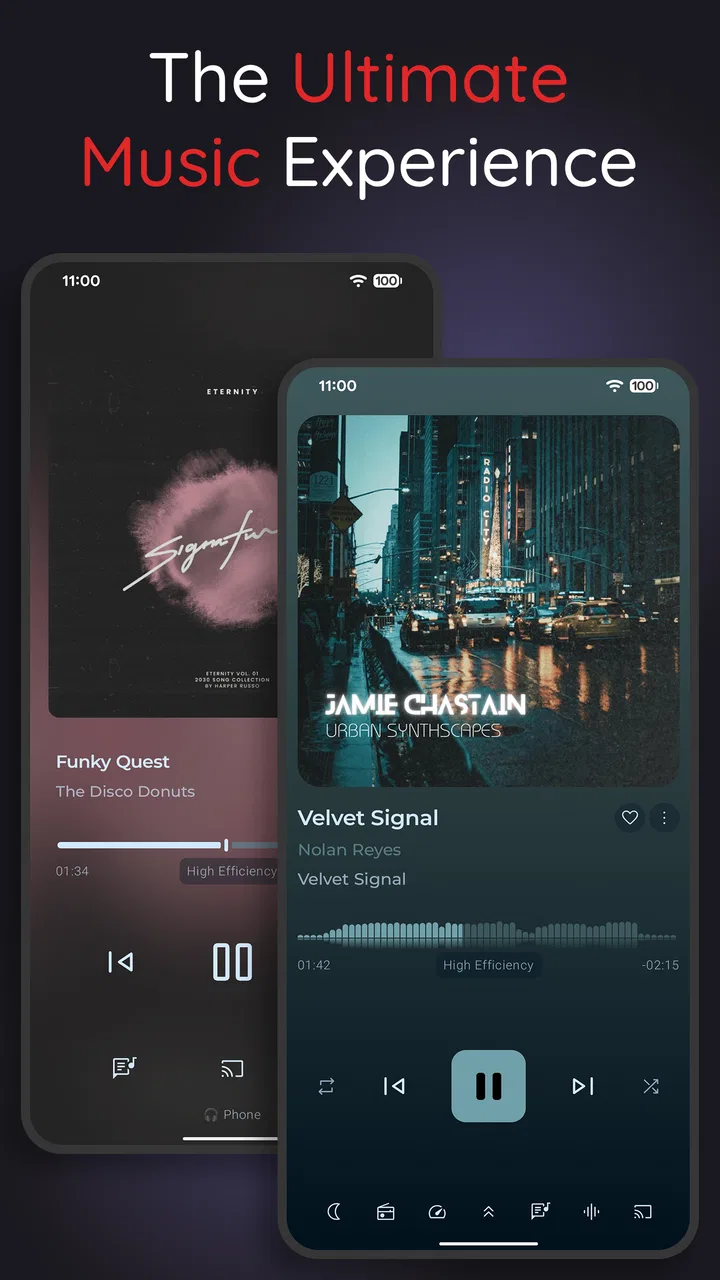
I approached Symfonium as the kind of music app that sits between a traditional phone player and a personal media hub. It is free to start, aimed at everyone, and developed by Tolriq • Genimee. The idea is straightforward on paper: bring music from different places into one listening interface, then add tools such as playlists, lyrics, an equalizer, and casting. In daily use, though, the most important question is not simply how many buttons it offers. It is how well it behaves when my connection is strong, weak, or unavailable.
That focus matters because Symfonium is not limited to the usual model of selecting files already stored on a phone. Its store summary points to server-based streaming alongside offline music playback, so the experience can change depending on where my library lives and how reliably the app can reach it. I found that flexibility appealing, especially when switching between a home collection and music carried locally. At the same time, it means the app rewards a little preparation more than a basic player does.
How Symfonium handles connected listening and mobile routines
I find connected listening most useful when I treat the phone as a flexible control point rather than the only place my music can live. Before heading out, I’d choose what needs to be available locally; at home, I’d let the server provide the wider library and use casting when I want the music in another room. That routine makes the handoffs clearer, and it leads naturally to the practical question of which parts of the setup deserve a quick check before I rely on them.
You May Also Like

 Blood Strike: 2.5 Anniversary
Blood Strike’s Loadouts Turn Every Drop Into a Tactical Gamble
A close look at Blood Strike’s custom loadouts: how fast access to signature weapons reshapes its battle royale rhythm, rewards preparation, and narrows the gap between fights.

 Pandora - Music & Podcasts
Pandora’s Music Is Easy to Start, but Harder to Recover
Pandora’s strength is its low-effort path from a seed to a station. Its weak spot is how much confidence it asks you to place in connection, setup, and quiet recovery.

 8 Ball Pool
 Is Built on Rivalries, Rematches, and Routine
A close look at the rivalries, rematches, shared routines, and unanswered safety questions that turn a quick pool match into a persistent mobile community.

 Samsung Music
’s Quiet Strength Is Playing What You Already Own
Its reach comes less from spectacle than from dependable access to a personal library. That simplicity is both the app’s strongest retention engine and its ceiling.

 AccuWeather: Weather Radar
AccuWeather Review: A Quick, Clear Forecast for Everyday Decisions
For everyday plans, the best forecast is the one you can understand quickly. AccuWeather makes rain timing, radar, and local conditions easy to act on, with a few trade-offs.

 Hill Climb Racing
Why Hill Climb Racing Still Turns Crashes Into One More Run
A tiny car, a bumpy hill and one more upgrade: Hill Climb Racing keeps resurfacing because its simple chaos makes every near-miss feel personal.
More From Our News Desk
View All News


A music library that depends on the route to your collection
The first thing I noticed is that Symfonium makes the source of the music part of the experience. With a conventional local player, the phone is usually the whole story: scan the device, choose an album, and press play. Here, server-based streaming introduces another step. The app becomes a practical front end for a collection that may be elsewhere, which is useful if I do not want to keep every album on my handset.
That arrangement is particularly attractive at home. I can keep a larger library associated with a server and use the phone as the control point rather than treating its storage as the only place music can exist. It also makes the app more interesting for listeners who already organize their music outside the standard streaming subscriptions. Instead of rebuilding a collection inside a separate service, I can work with the music environment I already use.
The trade-off is easy to understand: a remote library is only convenient while the path to it is convenient. A slow connection can affect browsing before it affects playback, because artwork, album information, playlists, and track responses may all need time to arrive. I would not judge the app solely by how quickly a local file opens. Its connected mode has more moving parts, and that is both its strength and its main source of friction.
What changes when I leave home
On a commute, the distinction between local and server-based listening becomes much more important. A locally available track is less exposed to signal changes, while a remote track depends on the connection remaining usable for the entire session. This is where the app’s offline music player role matters. I would prepare the music I expect to need before leaving rather than assume that a familiar server library will always be reachable.
That preparation is not just useful for flights or underground travel. It also helps in ordinary places where mobile coverage varies from one street to the next. A playlist that works perfectly in the kitchen may become awkward during a walk if the app has to keep reaching back to a server. My practical habit would be to keep a small, dependable local selection for routine travel and use streaming from the server when I have a stable connection and want more choice.
This creates a nice division of labor. Local playback is the dependable option for movement, while server access is the convenient option for breadth. I would not treat one as a replacement for the other. The best experience comes from deciding which source fits the situation instead of expecting a single mode to solve every listening problem.
Playlists, lyrics, and casting in real situations
The extra tools make more sense when connected to a specific routine. I can imagine starting an album from the server at home, sending it to a compatible cast destination, and leaving the phone as a remote rather than keeping the music confined to its small speaker. Casting is most useful when the phone is acting as a controller, although it naturally adds another dependency: the destination and the app need to communicate successfully.
Lyrics are similarly valuable in the right moment. They turn the player into something more engaging when I am following a song closely, practicing pronunciation, or simply trying to understand a line. They are not a substitute for a dedicated lyrics service in every situation, but having them inside the listening flow avoids the interruption of changing apps. The connected nature of some music information also means that the smoothness of this feature can depend on access to the relevant content.
Playlists are where I see the clearest everyday benefit. I can make one for a short walk, another for focused work, and a third for a longer trip without treating each listening session as a fresh search. The useful tip is to build playlists around connection conditions, not only moods: one that is safe for local playback and another that deliberately draws from the wider server library. That small distinction makes failures less disruptive later.
Equalizer control without overcomplicating the player
The equalizer gives Symfonium a more personal sound profile than a barebones file player. I appreciate having the option to adjust listening for different headphones or environments, but I would use it carefully. A strong boost can make a track seem more exciting at first and tiring later, especially during a long mobile session. My preference is to make modest changes and compare them at a comfortable volume rather than chase a dramatic effect.
This is also an area where expectations should stay realistic. An equalizer can shape the sound reaching the output device, but it cannot repair a poor recording or compensate for every limitation in headphones. Its value is practical rather than magical: it helps me make a familiar collection feel more comfortable across different listening setups. For someone who wants a simple play button and never adjusts sound, the control may be unnecessary. For someone with several headphones or strong preferences, it is a welcome layer.
Recovering when the connection stops cooperating
Connectivity problems are the real test of a server-oriented music app. A brief interruption can turn a seamless session into a pause, a slow response, or a moment of uncertainty about whether the command was accepted. I found that the most sensible approach is to separate recovery from troubleshooting. First, I would check whether the current item is available locally. If it is, switching to that playlist or album is faster than repeatedly asking a remote source to respond.
When a remote session fails, I would also avoid tapping the same control over and over. Repeated commands can make it unclear whether the app is delayed or has received several requests. Waiting briefly, checking the active destination when casting, and then trying one deliberate action is less frustrating. This is a small workflow detail, but it makes connected playback feel more predictable.
Another useful habit is to test an important playlist before leaving a reliable network. Opening it, starting a track, and confirming that the intended source is ready can reveal a problem while there is still time to fix it. I would especially do this before a long journey or a listening session where changing apps is inconvenient. Symfonium gives me flexibility, but flexibility works best when I verify the path I plan to use.
Keeping mobile data under control
Server-based streaming is convenient, but convenience can become expensive or unreliable when mobile data is limited. I would reserve remote playback for situations where I know the connection is stable and use local music for repeated listening. Albums I play often are better candidates for local access than albums I am only sampling once, because repeated remote sessions offer less benefit after the first listen.
There is also a quality-versus-continuity trade-off in any connected listening setup. A stronger connection may make higher-quality playback comfortable, while a weaker one favors a more conservative approach. I would not begin a long trip by exploring a large remote library; I would choose the playlist first, make sure the needed music is available in the appropriate way, and then start listening. That workflow reduces both data surprises and the chance of being left without music.
For households with a shared server, timing matters too. Browsing and playing from the collection when the home network is busy may feel less responsive than using it at a quieter moment. This is not a flaw unique to Symfonium, but the app makes the distinction more visible because the library is not necessarily stored on the phone. If immediate access matters more than library size, local playback remains the simpler answer.
Who will appreciate the design most
I think Symfonium is a strong fit for listeners who maintain their own music collection and want one mobile interface for local playback, server-based access, playlists, lyrics, equalizer controls, and casting. It is also appealing to people who move between private listening and a larger room setup. The app gives those users more control than a minimal player without forcing them to treat the phone as the only source of music.
It makes less sense for someone who wants a purely automatic subscription experience with no interest in managing where music comes from. If the goal is instant access to a huge catalog with minimal setup, a mainstream streaming service may feel more direct. Symfonium’s appeal is not that it removes every decision. Its appeal is that it gives me useful decisions and puts several listening methods in one place.
I would also be cautious about recommending it to a listener who never wants to think about connectivity. The app can support different listening situations, but that means I need to understand whether a track is local, remote, or being sent elsewhere. Once that becomes familiar, it is manageable. Before then, the extra flexibility may feel like extra complexity.
What the public response suggests
The app has an average rating of 4.6 from around ten thousand ratings, with roughly one thousand three hundred written reviews, and it has passed five hundred thousand installs. Those figures suggest that Symfonium has found a substantial audience rather than remaining a niche experiment. I still would not use popularity as a substitute for fit, because the people most likely to enjoy it are specifically those who value control over their music sources.
It has been available since May 7, 2022, and the age classification is Everyone. The free entry point makes it easy to test whether the connected-library approach suits my habits before spending anything. There are in-app purchases ranging from $0.99 to $8.99 per item, so I would check the available options inside the store before assuming that every capability is included in the initial download. The important point is that trying the basic experience does not require committing to a paid app upfront.
My practical setup for a smoother experience
If I were setting up Symfonium for regular use, I would begin with three listening groups. The first would contain music I can rely on when traveling. The second would be a flexible collection for home listening through the server. The third would be a casting-friendly selection for shared listening. This organization is more useful than one enormous playlist because each group matches a different technical situation.
I would then adjust the equalizer with the headphones I actually use, not with a generic setting chosen in a quiet room. After that, I would test a playlist from each source and confirm that casting behaves as expected before relying on it during a gathering. Finally, I would keep lyrics as a convenience rather than a reason to make every session dependent on additional online information.
This setup also answers a common concern: whether the app is suitable for long periods away from a dependable network. It can be, provided I prepare the local side of my library instead of assuming that server access will follow me everywhere. The more important the listening session, the more I would favor a known local option and treat remote access as the bonus layer.
Where alternatives may be the better choice
A basic local music player is better if I want the fewest possible choices and all my tracks are already on the phone. It starts quickly, has fewer connection variables, and may be easier for someone who does not use casting or a remote collection. Symfonium earns its place when those limitations become inconvenient, not simply because it has a longer feature list.
A mainstream streaming app may be preferable for discovery, editorial recommendations, and a catalog that I do not personally maintain. Symfonium is more compelling when my own library matters, when I want server access, or when I prefer to control playback across several listening contexts. The comparison is therefore less about which app is universally superior and more about whether I am managing music or mainly consuming a service.
Dedicated casting or home-audio applications can also be better for users whose entire routine revolves around one hardware ecosystem. Symfonium’s advantage is the combination of music management and playback tools, but a specialized controller may offer a more focused experience for a single room or device. I would choose Symfonium when I want one app to bridge local music, remote access, and personal playback adjustments rather than optimize only one of those tasks.
My verdict on its connected approach
After using it as both a player and a bridge to a wider music setup, I see Symfonium as a thoughtful choice for people who want their collection to remain flexible. Its strongest quality is not any one feature in isolation. It is the way local playback, server-based listening, playlists, lyrics, equalizer controls, and casting can cover different parts of the day.
The cost of that flexibility is awareness. I need to know when I am depending on a connection, prepare important music for mobile use, and accept that casting adds another point where things can go wrong. Those are reasonable trade-offs for me because the app gives my library more reach without forcing every listening session into the same pattern.
My recommendation is simple: choose Symfonium if you want control over where your music comes from and how it reaches you. Start with the free version, test the exact combination of local and server-based listening you expect to use, and pay attention to how it fits your connection habits. If you want a completely hands-off streaming catalog, another kind of music app will probably feel easier. If you want a capable personal music center that remains useful across home networks, mobile listening, and casting, Symfonium is worth serious consideration.
FAQs for Symfonium: Music player & cast
01What is Symfonium: Music player & cast?
Symfonium is an Android music player designed to bring music from multiple personal and streaming sources into one polished interface. It can organize local files and compatible media servers, display detailed library information, and provide playback controls suitable for everyday listening. Its main appeal is flexibility: users can manage different collections without constantly switching between separate apps.
02Which music services and media servers are compatible with Symfonium?
Symfonium is primarily intended for users with local music libraries or supported personal media-server services. Compatibility can depend on the server, protocol, and features enabled on your account, so it is worth checking the current official compatibility list before downloading. Some services may require additional setup, a subscription, or a separately configured server, and not every streaming platform is supported.
03Can Symfonium cast music to other devices?
Yes, casting is one of Symfonium’s key features. Depending on your equipment and configuration, the app can send music to compatible receivers and connected playback devices rather than limiting listening to your phone. The exact experience may vary according to network quality, receiver support, and the selected music source. Both the phone and target device generally need to be connected correctly for reliable playback.
04Does Symfonium work offline and support downloaded music?
Symfonium can be useful for offline listening, especially when working with music stored directly on an Android device or content made available through supported download and caching features. Offline behavior may differ between local files, media servers, and online services because each source has its own restrictions. Before relying on it while traveling, test your preferred albums and verify that they remain accessible without an internet connection.
05Is Symfonium free to use, and is it available for iPhone or iPad?
Symfonium is an Android-focused application, so users should confirm device availability before looking for an iOS download. The app may offer a trial or require a purchase or subscription depending on the current release and region. Because pricing and licensing can change, check the Google Play listing for the latest details. Also remember that access to connected media servers or streaming services may involve separate costs.
Pros
- Supports many music servers and cloud sources in one app.
- Reliable casting to compatible speakers and TV devices.
- Powerful library filters make large collections easier to browse.
- Gapless playback and replay gain improve listening quality.
- Highly customizable interface
- playback
- and notification controls.
Cons
- Most advanced features require purchasing the full version.
- Setup can be confusing when connecting multiple music services.
- Some server features depend on the capabilities of each provider.
- The interface may feel dense for users wanting a simple player.
- Battery use can increase during long streaming or casting sessions.

Symfonium: Music player & cast
Gallery